
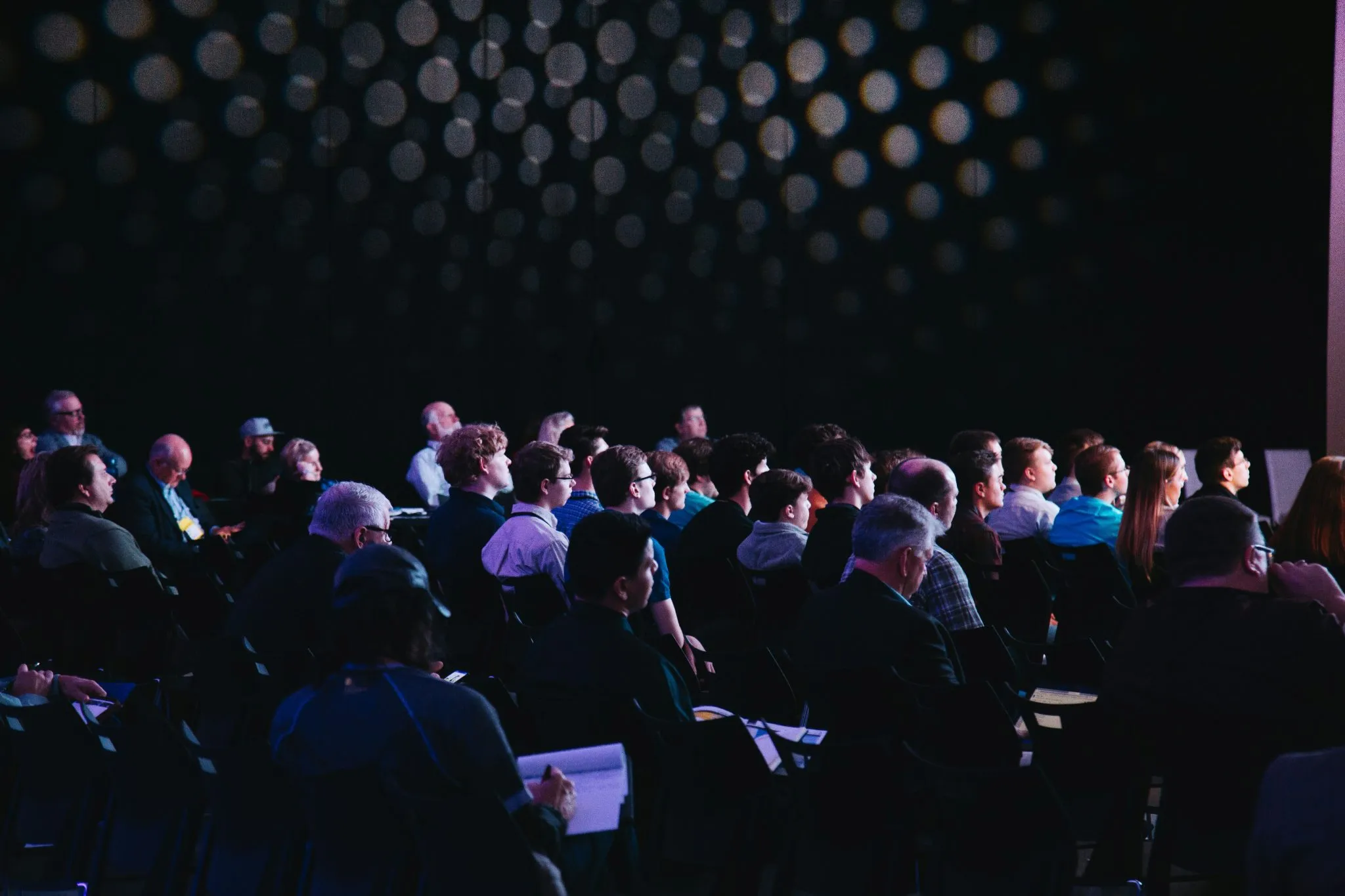
Something is shifting in how major organisations communicate strategy internally. The all-hands meeting in a hotel ballroom, the leadership keynote on a blank stage, the strategy offsite in a generic conference centre: these formats are not disappearing, but they are being improved. More communications teams are asking not just what leadership wants to say, but where and how that message should land.
This is the thinking behind the immersive corporate event: an approach to leadership events that treats the physical and sensory environment as part of the communication itself, not just a container for it.
Why the Environment Has Always Been Part of the Message
“The medium is the message” — Marshall McLuhan’s formulation from 1964 — is one of the oldest ideas in communication theory, and it applies as much to physical space as it does to format or channel. Research in environmental psychology consistently shows that ambient conditions — lighting, spatial design, sound — affect how audiences receive and retain information. The physical context of a presentation is not neutral. It shapes the emotional register before a speaker says a word.
Corporate events have been slow to act on this. For years, the working assumption has been that content carries the communication on its own, that good strategy speaks for itself regardless of where it is delivered. This is hard to defend for companies that invest seriously in brand design and external storytelling, then present internally in environments that actively contradict those values.
An organisation that positions itself as innovative deserves an event environment that reflects it. When the two are misaligned, the dissonance may be subtle, but audiences pick it up.
What an Immersive Corporate Event Actually Looks Like
The term “immersive” is sometimes associated with spectacle for its own sake. In corporate leadership events, it is most effective when it serves a specific communication purpose.
In practice, an immersive corporate event might involve any combination of the following:
Background content and atmospheric staging. The visual environment surrounding a speaker — backdrop, ambient lighting, spatial audio — can be programmed to shift with the presentation. A segment on global reach lands differently when the speaker is framed by a live data visualisation of the company’s operations. A segment on transformation carries more weight when the visual environment changes around it.
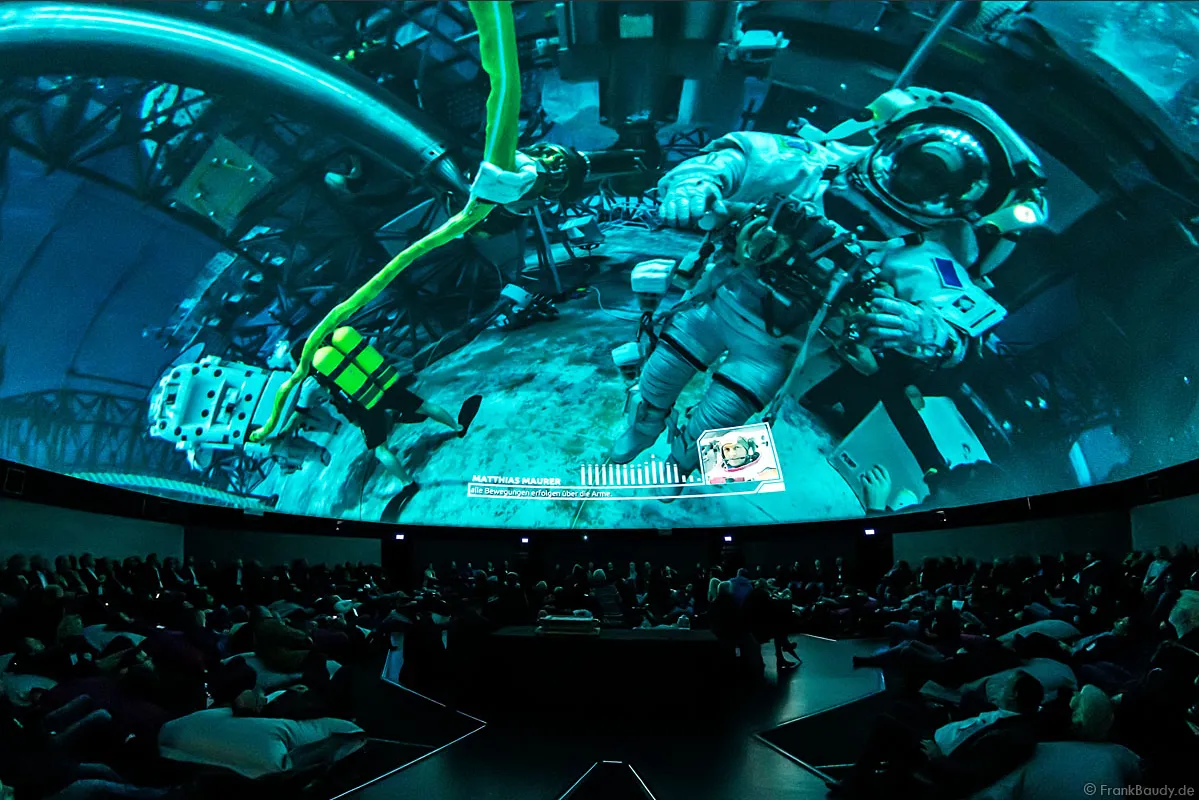
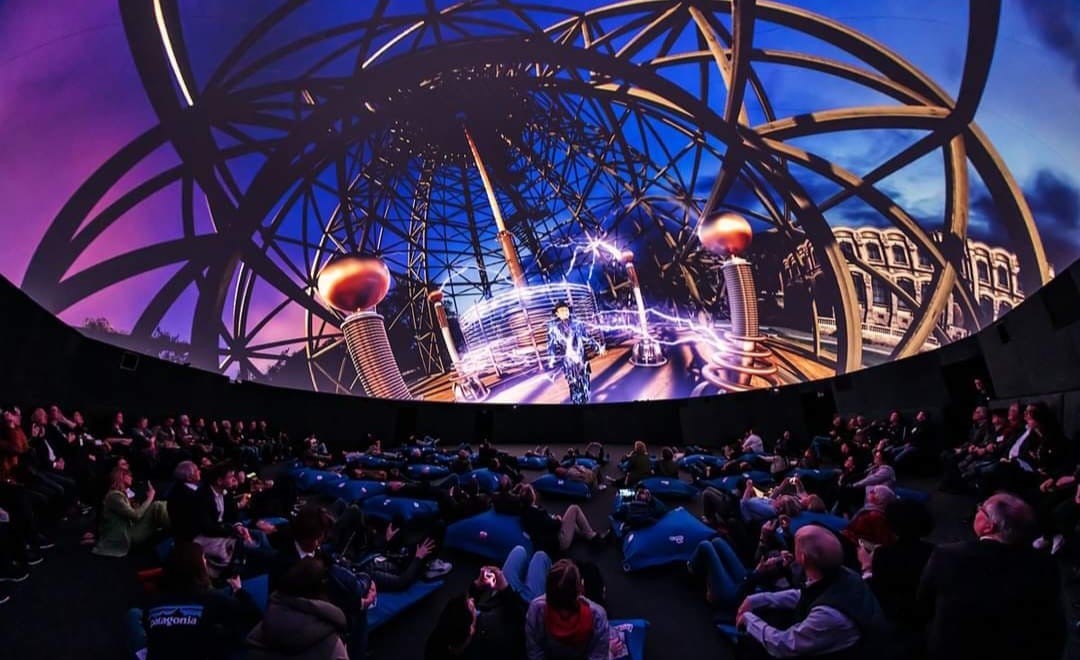
Fulldome and wraparound environments. For moments where an audience needs a visceral sense of scale — a market opportunity, a global challenge, a ten-year vision — a 360° immersive environment is genuinely hard to replicate with conventional staging. Softmachine’s fulldome production capabilities allow companies to use existing dome venues or bring mobile dome systems to a location of their choosing.
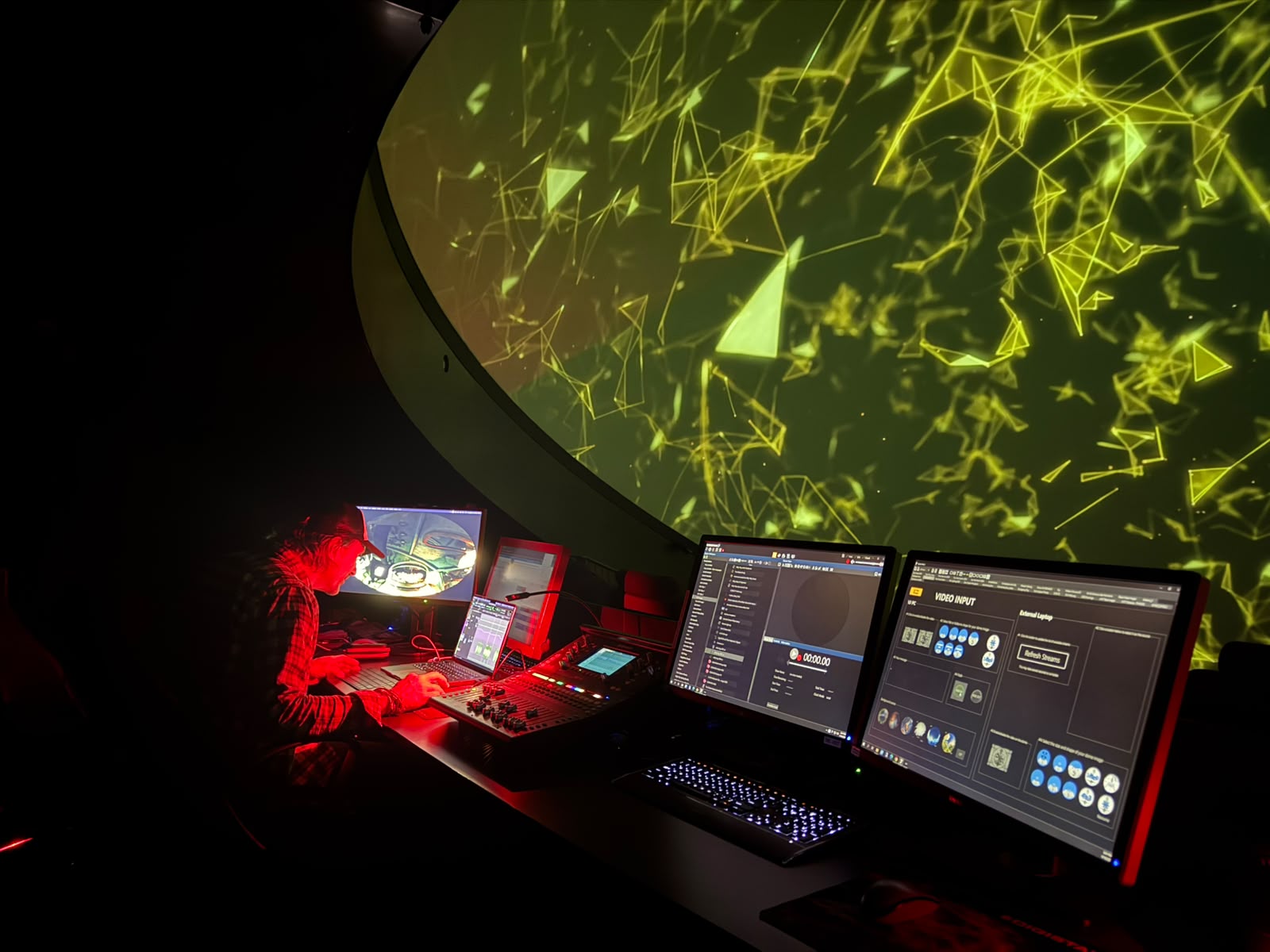
Narrative content production. Often the most overlooked part. An immersive environment without strong content is just a visual effect. The most effective corporate immersive events pair technical staging with original film, animation, or real-time data storytelling built specifically for the brief.
The Business Case for Immersive Corporate Events
For corporate communications and internal events teams, the argument for immersive production comes down to three measurable outcomes.
Focus and emotional engagement. A 2020 PwC study on VR-based soft skills training found that participants in immersive environments were four times more focused than those doing the same training via e-learning, and 3.75 times more emotionally connected to the content than classroom participants. The study used virtual reality specifically, which is worth noting because the mechanism is the same one at work in immersive live events: when an environment commands your full attention, the content connects differently. For leadership events where a strategic message needs to carry into day-to-day behaviour well after the event, that kind of emotional connection matters.
Retention. Multisensory engagement consistently improves information recall compared to passive formats — a finding consistent with Kolb’s experiential learning theory, which has underpinned corporate learOkay,ning and development practice for decades. When a message is delivered through a designed environment alongside the spoken word, audiences tend to remember both the content and the experience of receiving it.
Brand coherence. Employees and leadership teams form impressions of an organisation’s culture through every touchpoint, including internal events. A company that presents itself as a design or innovation leader externally, but holds its strategy summit in a generic, undesigned space, sends a signal it probably does not intend to. The internal event is a brand expression whether it is treated as one or not.
The Keynote Speaker in an Immersive Context
The keynote format is standard across corporate conferences and strategy summits, and in most cases the speaker’s environment is an afterthought. A neutral backdrop, a branded banner, a generic slide template behind them.
The potential here is largely untapped. A keynote speaker’s message is shaped by what surrounds them in much the same way a film performance is shaped by set design, score, and cinematography. Background content — animated, data-driven, or atmospheric — can frame a speaker’s narrative before they begin. Transitions between segments can happen through environmental shifts rather than slide cuts. The moment a speaker enters an immersive environment rather than a standard stage is a different register entirely.
The best immersive keynote production is, in a sense, invisible. The audience experiences the speaker and the message more powerfully without necessarily knowing why. The benchmark is not how impressive the technology looks, but how much more effective the communication is.
Practical Considerations
Lead time. Purpose-built immersive content takes longer to produce than a standard AV setup. Getting a production partner involved early in the planning cycle means content development can run alongside event logistics rather than being rushed at the end.
Scalability. Not every corporate event needs full-scale immersive staging. Some of the most effective corporate productions we have seen use a single well-placed intervention: an atmospherically designed keynote backdrop, a projection-mapped reveal moment, or one segment inside a fulldome. Starting focused is a reasonable way to evaluate what the format can do before going bigger.
Expertise over equipment. The technical infrastructure for building immersive environments is more accessible than it has ever been — the experiential marketing segment alone is projected to grow at over 31% annually through 2030, which reflects both rising demand and falling barriers to entry. What remains genuinely scarce is the creative and editorial judgment to make the environment serve the communication rather than compete with it.
Conclusion
The immersive corporate event is not a product category or a technology checklist. It is a way of thinking about what a leadership event is actually trying to do, and then designing the environment accordingly.
If you are responsible for corporate communications or internal events and want to explore what this looks like in practice, Softmachine works at the intersection of immersive technology and narrative content production. Get in touch to talk through what is possible for your next event.
We are softmachine.de, a creative agency specialised in immersive storytelling and immersive corporate events. For fulldome and giant screen film distribution, visit our sister company reef-distribution.com.