

AR / VR
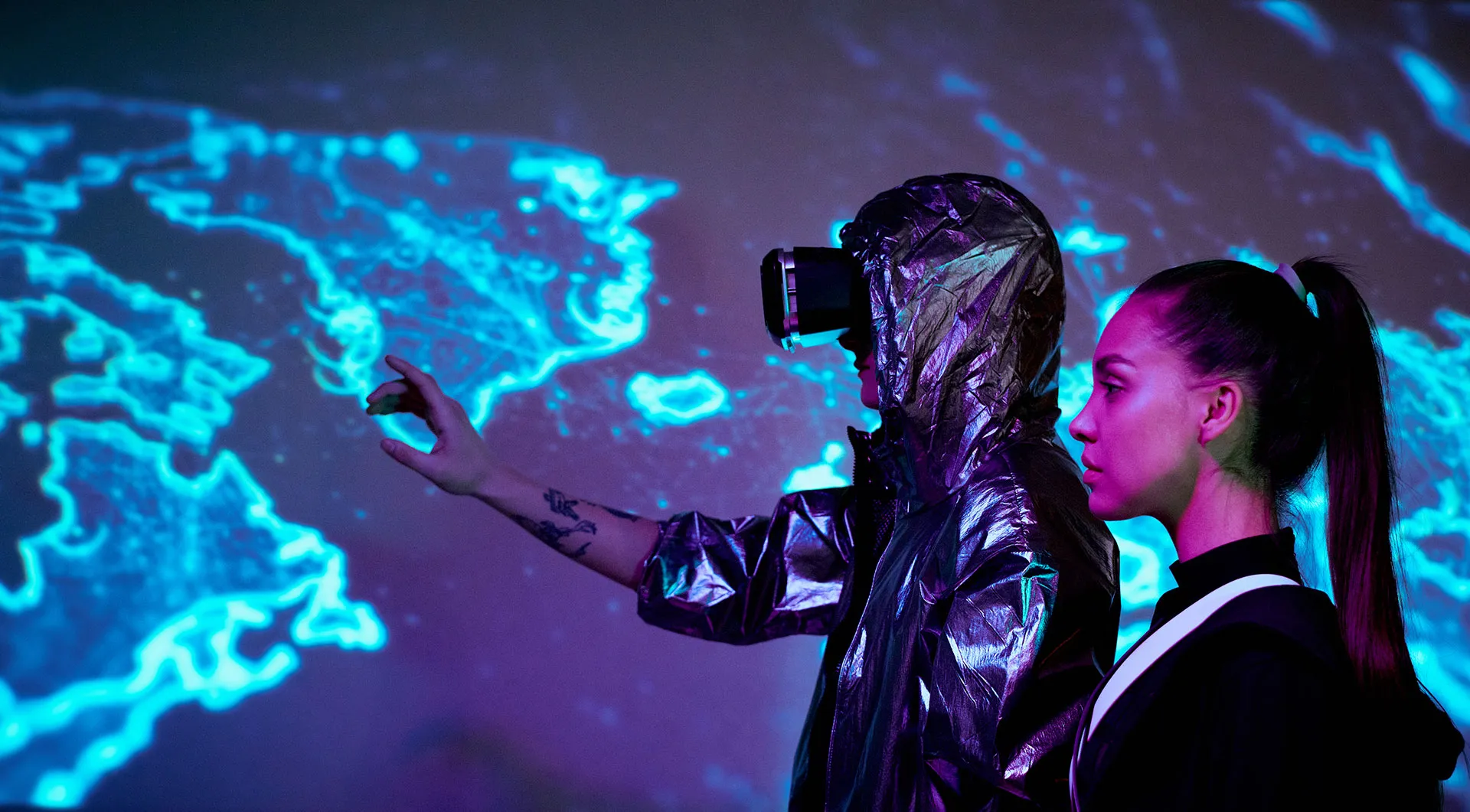
Headset, browser or in-room — we build interactive AR and VR experiences on real-time engines, with the analytics to prove engagement.
AR & VR Experiences
We build AR and VR experiences that give people more than something to look at. They let audiences step inside a story, explore a space, interact with what they find and decide where to look next.
The technology matters, but it is not the point. We use virtual reality, augmented reality and real-time 3D to create experiences with a clear narrative, a sense of place and a reason to engage.
AR and VR development across platforms
Different experiences call for different formats. We develop immersive experiences for headsets, browsers, physical spaces and live environments.
- Headset VR — immersive experiences for Meta Quest, Pico, Apple Vision Pro and HTC Vive
- WebXR — browser-based VR and AR experiences that can be accessed without a dedicated app
- Room-scale VR — guided, spatial and walkable experiences where the audience moves through the environment
- Interactive AR — mobile, tablet and headset-based experiences that bring digital content into the physical world
- Location-based AR — experiences designed for exhibitions, public spaces, museums and science education
The format follows the experience. We work with the technical constraints of each platform without letting them dictate the story.
VR and AR designed as storytelling environments
We approach immersive technology as another way of directing an audience.
In VR, there is no fixed frame. In AR, the physical world remains part of the scene. That changes how a story is structured, how information is revealed and how people understand where to look and what to do.
We design the user’s perspective, movement and interaction alongside the more familiar elements of production: image, sound, pacing, character and narrative.
Our projects have taken audiences through neural pathways, explored energy transitions and brought historical stories into physical space. Real-time production using Unreal Engine and Unity gives us the flexibility to build these environments, test interaction and develop experiences that respond to the audience.
Interactive experiences for museums, exhibitions and science education
AR and VR can make complex subjects tangible.
A visitor can move through a scientific process rather than simply read about it. A historical environment can become a place to explore. A concept that is difficult to represent at human scale can be experienced from inside.
We create interactive experiences for museums, science centres, exhibitions, educational projects and cultural spaces, combining visual storytelling with interaction, spatial audio and real-time 3D.
The objective is not to add interaction for its own sake. Every movement, choice or discovery should give the audience a reason to keep exploring.
AR and VR for live performance
Immersive technology does not have to happen behind a headset.
We can bring digital environments and AR elements onto the stage, creating hybrid performances where physical performers interact with spatial media and digital content in real time.
The result sits somewhere between theatre, installation and immersive media: a shared experience where the audience can see the physical and digital worlds operating together.
From AR and VR to fulldome
An experience built for a headset does not necessarily have to stay inside one.
We can adapt AR and VR concepts for fulldome environments, translating spatial storytelling and immersive visual content into 360° experiences for planetariums, science centres, museums and other large-format venues.
This creates a route between individual and shared immersive experiences. A VR environment can become a fulldome production. An interactive AR concept can be developed into a dome experience. Visual assets and real-time environments can be designed with more than one format in mind from the beginning.
With experience across both XR and fulldome production, we can consider the final viewing environment as part of the creative process rather than treating format conversion as an afterthought.
Measure interaction and engagement
Where it is appropriate and with audience consent, we can capture data about how people use an experience.
Depending on the project, this can include dwell time, interaction heatmaps, eye tracking and motion tracking. These measurements can help show how audiences move through an installation, which elements attract attention and where people engage most strongly.
For museums, exhibitions and educational projects, that can turn audience behaviour into useful evidence for evaluation and future development.
Built around the experience
Whether the audience is wearing a headset, holding a tablet, walking through an exhibition or sitting beneath a dome, the principle is the same.
Start with what people should experience. Then build the technology around it.
The same craft powers our films
The techniques we invent for a live show go on to shape fulldome films and co-productions — and vice versa. Explore the other half of the studio.
Planning an event?
Book a consultation and we'll map the experience with you. We reply within two working days.
Book a consultation